When it comes to flooring options, tile and hardwood usually
get the spotlight — but vinyl flooring has quietly become one of the most
practical choices for homes, offices, and commercial spaces. It's durable,
water-resistant, budget-friendly, and easier to install than most alternatives.
Here's a closer look at what makes vinyl flooring worth considering, and what
to keep in mind before choosing it.
1. What Is Vinyl Flooring, Exactly?
Vinyl flooring is a synthetic flooring material made
primarily from PVC (polyvinyl chloride), layered with a printed design and a
protective wear layer on top. It comes in several forms:
- Vinyl
Sheets — Large rolls installed in one continuous piece, ideal for
seamless, waterproof flooring in kitchens and bathrooms. - Vinyl
Tiles — Individual tiles that mimic the look of ceramic or stone,
easier to replace individually if damaged. - Luxury
Vinyl Planks (LVP) — Designed to closely resemble hardwood flooring,
popular in living rooms and offices for a wood-like look at a fraction of
the cost.
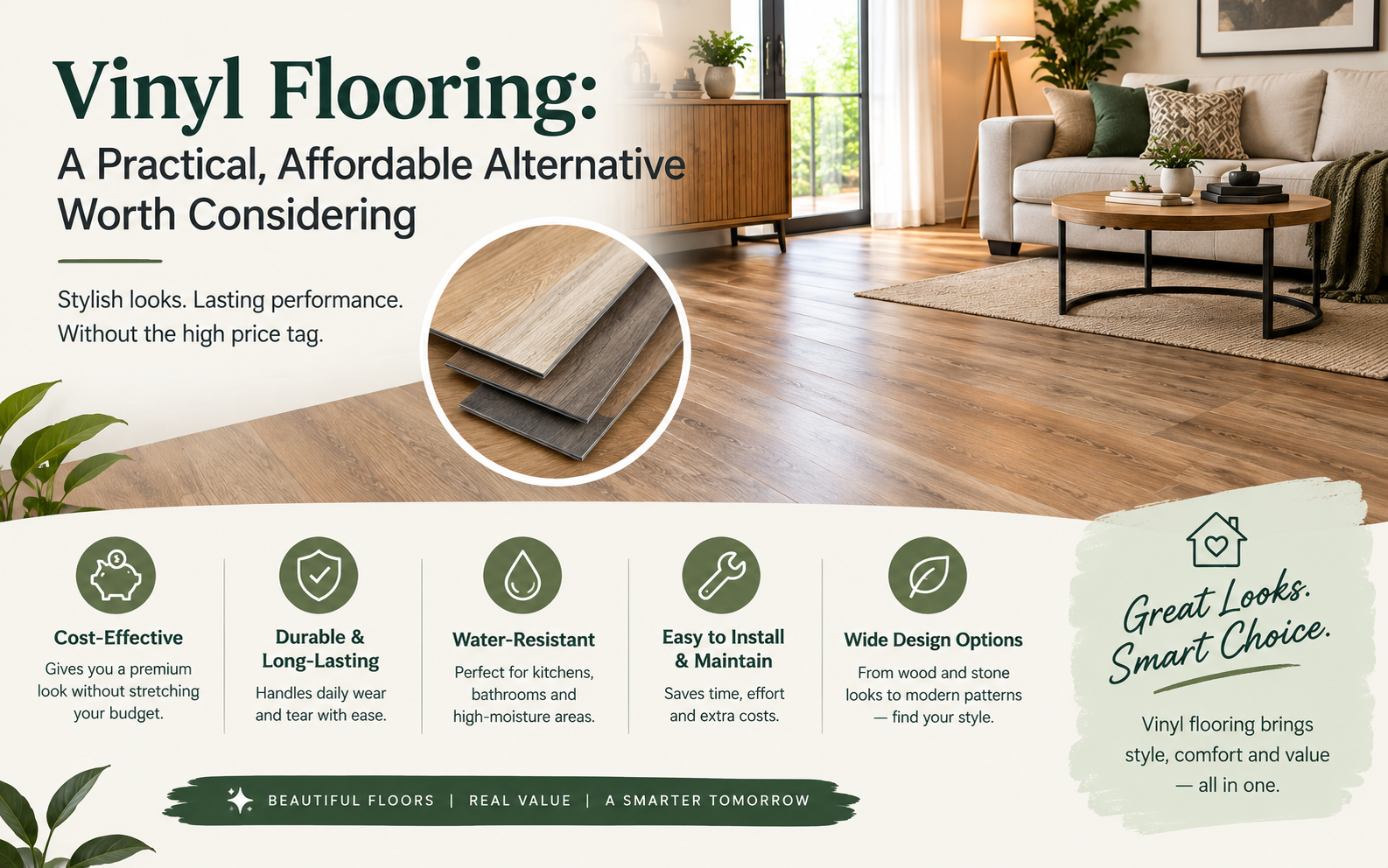
2. Why People Choose Vinyl Flooring
Water Resistance
Unlike hardwood, vinyl handles moisture well, making it a strong choice for
kitchens, bathrooms, and basements where spills and humidity are a concern.
Durability
A good-quality vinyl floor can withstand heavy foot traffic, resist scratches,
and hold up well in high-use areas like hallways and commercial spaces.
Affordability
Vinyl typically costs significantly less than hardwood, natural stone, or
high-end tile — both in material and installation cost.
Comfort Underfoot
Vinyl has a slight cushioning effect compared to tile or stone, making it more
comfortable to stand on for long periods, which is why it's popular in
kitchens.
Easy Maintenance
Regular sweeping and occasional damp mopping is usually enough — no sealing,
polishing, or special cleaning products required.
Design Variety
Modern vinyl flooring comes in a wide range of finishes — wood-look planks,
stone-look tiles, patterned designs — making it adaptable to almost any
interior style.
3. Things to Consider Before Choosing Vinyl
Wear Layer Thickness
The wear layer (the clear protective top layer) determines how well the floor
resists scratches and wear over time. A thicker wear layer generally means
better durability, especially in high-traffic areas.
Subfloor Preparation
Vinyl flooring shows imperfections in the subfloor beneath it. A smooth, clean,
and level subfloor is essential for a good finish and to prevent premature
wear.
Not Fully Repairable
Unlike hardwood, which can be sanded and refinished, damaged vinyl usually
needs to be replaced rather than repaired — either the whole sheet or
individual tiles/planks, depending on the type installed.
Environmental Sensitivity
Extreme temperature changes can cause vinyl to expand or contract slightly, so
it's worth checking product suitability for spaces with significant temperature
swings, like unheated outdoor-facing rooms.
4. Where Vinyl Flooring Works Best
- Kitchens
and bathrooms — water resistance makes it a practical, low-maintenance
choice - Commercial
spaces and offices — durability and easy upkeep suit high foot traffic - Rental
properties — affordable to install and replace between tenants - Basements
— moisture tolerance makes it more forgiving than hardwood in below-grade
spaces
5. Installation: DIY or Professional?
Vinyl tiles and planks with click-lock or peel-and-stick
systems are relatively DIY-friendly for those comfortable with basic home
improvement. Vinyl sheet flooring, however, usually benefits from professional
installation, since a smooth, seamless finish requires precise cutting and
fitting, especially around edges and fixtures.