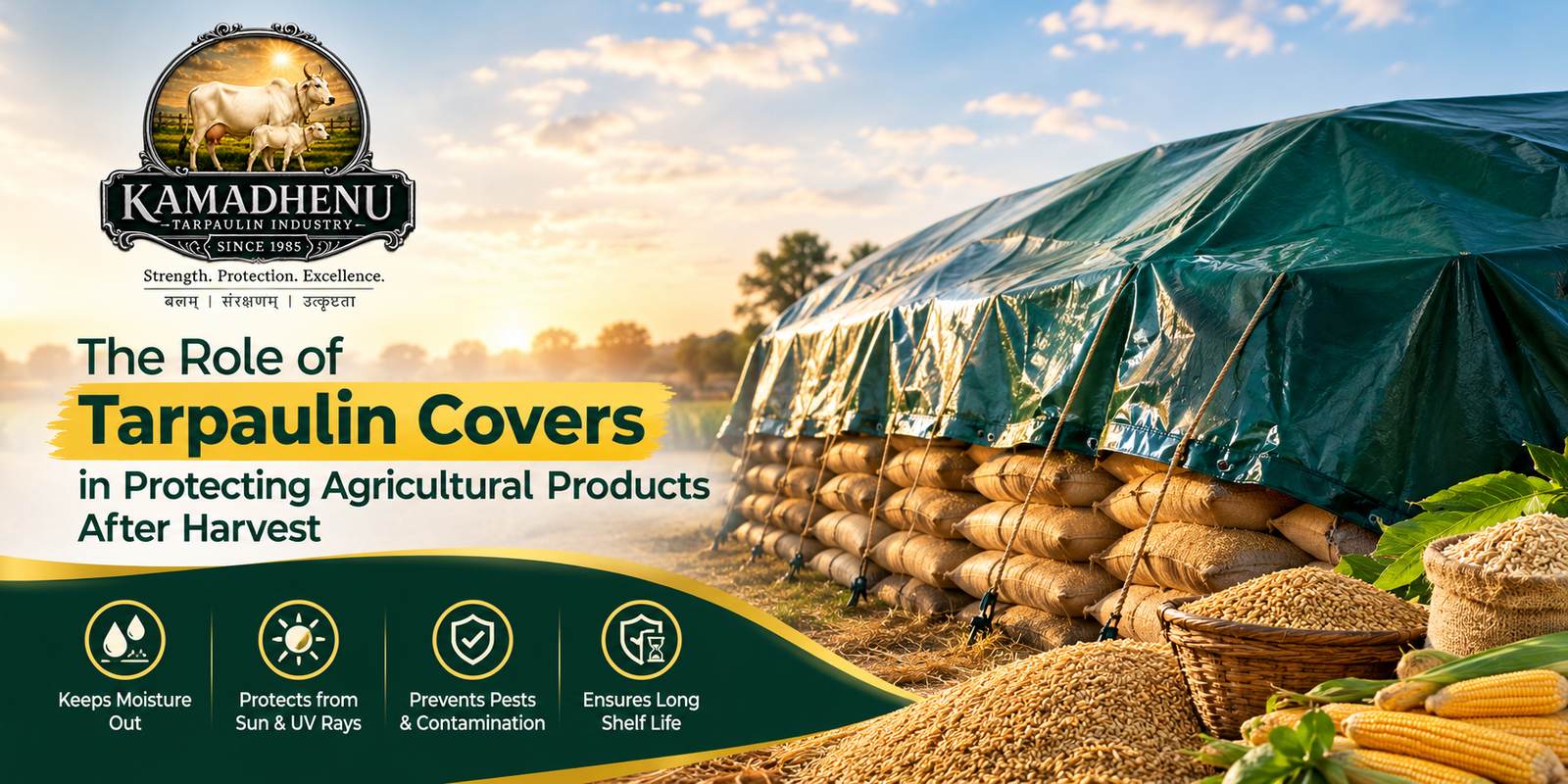
Agricultural products require proper protection after
harvesting to maintain their quality and reduce avoidable losses. Rain, direct
sunlight, dust, and unexpected weather changes can affect harvested crops
during handling, transportation, and temporary storage. Tarpaulin covers offer
a practical way to protect agricultural materials when used appropriately.
Protecting Harvested Crops from Rain
Unexpected rainfall can create difficulties when harvested
crops are left outdoors. Excess moisture may encourage spoilage, mould growth,
and deterioration in certain agricultural products. Waterproof tarpaulin covers
can help shield crops from direct rain exposure while they are being moved or
temporarily stored. However, adequate ventilation and moisture control remain
important to prevent condensation.
Reducing Exposure to Sunlight and Dust
Strong sunlight can affect the quality of some agricultural
products, especially when they remain exposed for extended periods. Dust and
airborne debris can also contaminate harvested materials. Depending on the crop
and storage conditions, a suitable tarpaulin cover can provide a protective
barrier against these external elements.
Supporting Agricultural Transportation
During transportation, agricultural products may encounter
wind, dust, and changing weather conditions. Tarpaulin sheets can cover goods
carried on trucks and other transport vehicles, helping keep the load
protected. Secure fastening is essential to prevent the cover from shifting
during travel. The selected sheet should suit the load size, transport method,
and expected environmental conditions.
Choosing the Right Agricultural Tarpaulin
Farmers should consider material strength, water resistance,
size, and ease of handling when selecting a tarpaulin. Lightweight sheets can
be convenient for temporary applications, while heavier-duty options may be
more appropriate for frequent outdoor use. Reinforced edges and secure
fastening points can improve handling and stability.
It is also important to select a cover suitable for the
particular crop. Some agricultural products require breathable storage
conditions, so completely covering damp produce without ventilation may create
additional problems.
Maintaining Tarpaulin Sheets
Regular maintenance can extend the useful life of
agricultural tarpaulins. Remove accumulated dirt, inspect the sheet for tears,
and dry it properly before folding and storing. Keep the material away from
sharp tools and rough surfaces that could damage it.
Conclusion
Tarpaulin covers can support agricultural operations by
protecting harvested products from rain, dust, sunlight, and
transportation-related exposure. Choosing the right material and using it
correctly can improve convenience and help reduce avoidable losses. Kamadhenu
Tarpaulins can be considered when exploring suitable tarpaulin solutions for
agricultural protection and everyday farm requirements.