If you've ever stood in front of a stack of tarpaulins
wondering which one to buy, you're not alone. "Tarpaulin" sounds like
a simple product, but the right choice depends entirely on what you're
protecting, where, and for how long. At Kamadhenu Tarpaulin Industry, we've
been engineering protection solutions out of Bengaluru since 1985, and one
question we hear more than any other is: HDPE or canvas — which one do I
actually need?
Here's a straightforward breakdown to help you decide.
Start With the Job, Not the Material
Before comparing fabrics, ask what the tarpaulin needs to
survive:
- Is
it outdoors year-round, or used occasionally? - Does
it need to withstand monsoon rain, harsh sun, or both? - Are
you covering something rigid (machinery, construction material) or
something that needs a soft touch (furniture, delicate goods)? - Is
weight or portability a concern?
The answers usually point you toward one material over the
other.
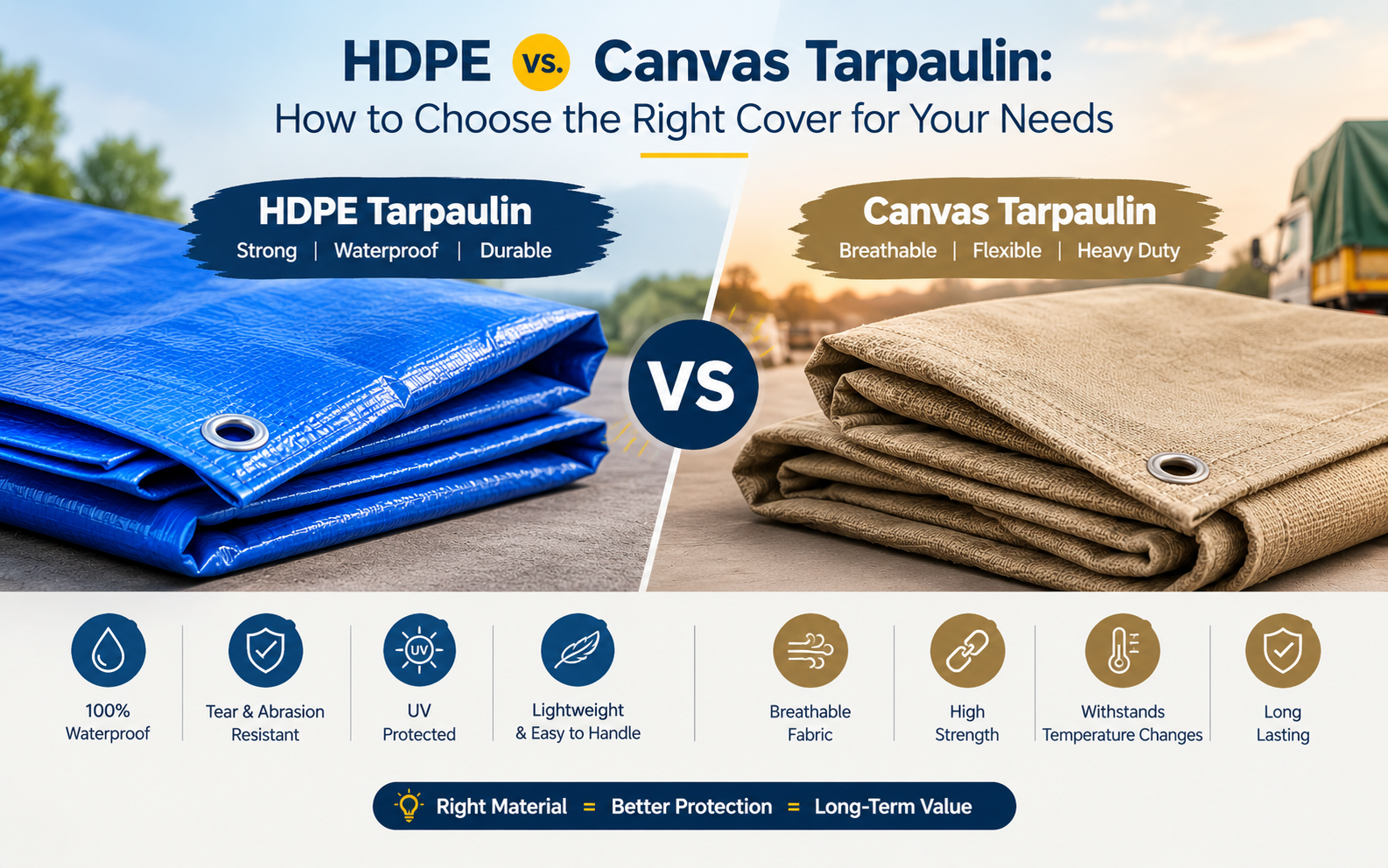
HDPE Tarpaulin: Built for Tough, Constant Exposure
HDPE (High-Density Polyethylene) tarpaulins are lightweight,
waterproof, and UV-resistant — making them the go-to choice for demanding,
exposed conditions. They're ideal for:
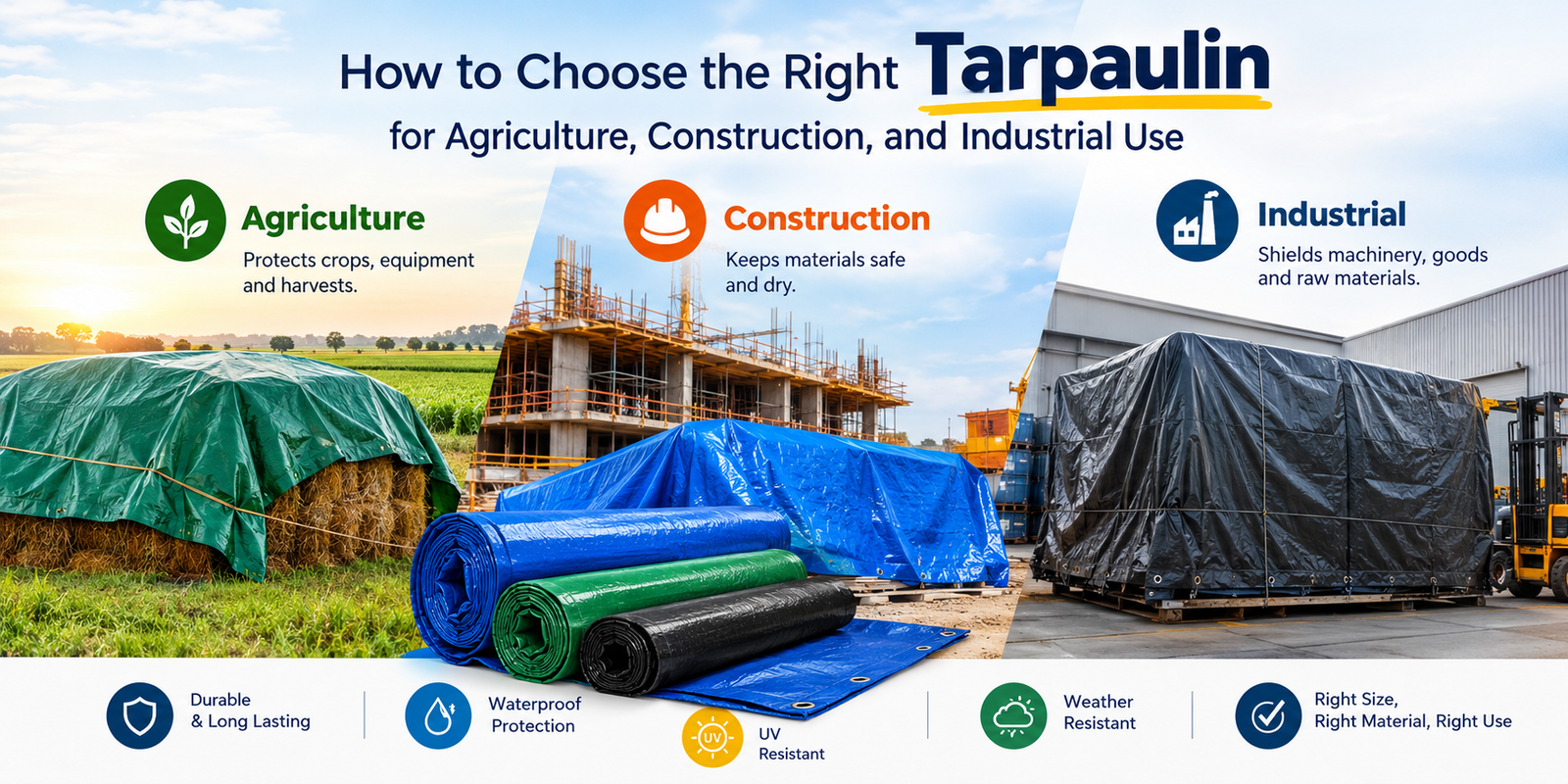
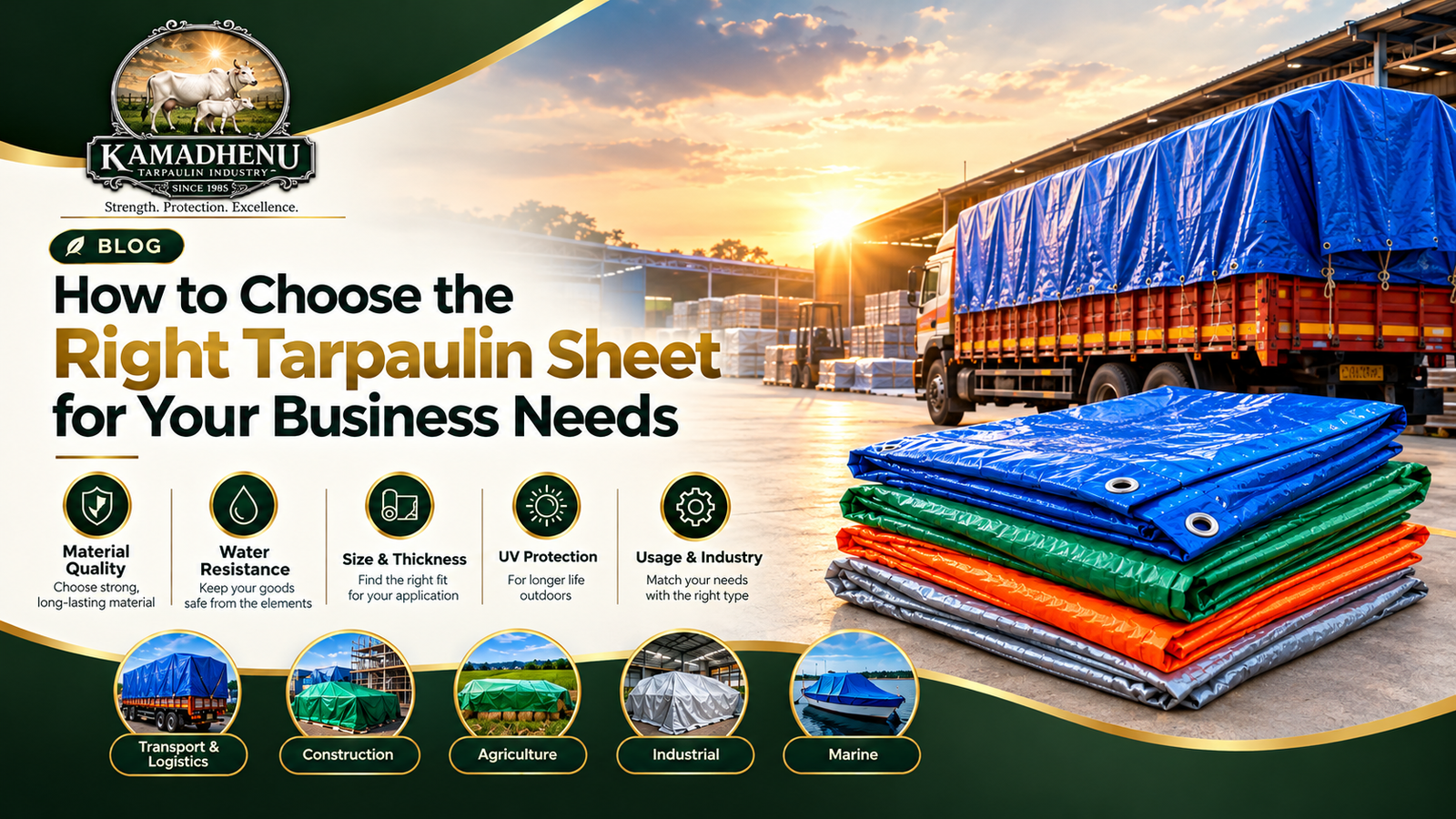
- Construction
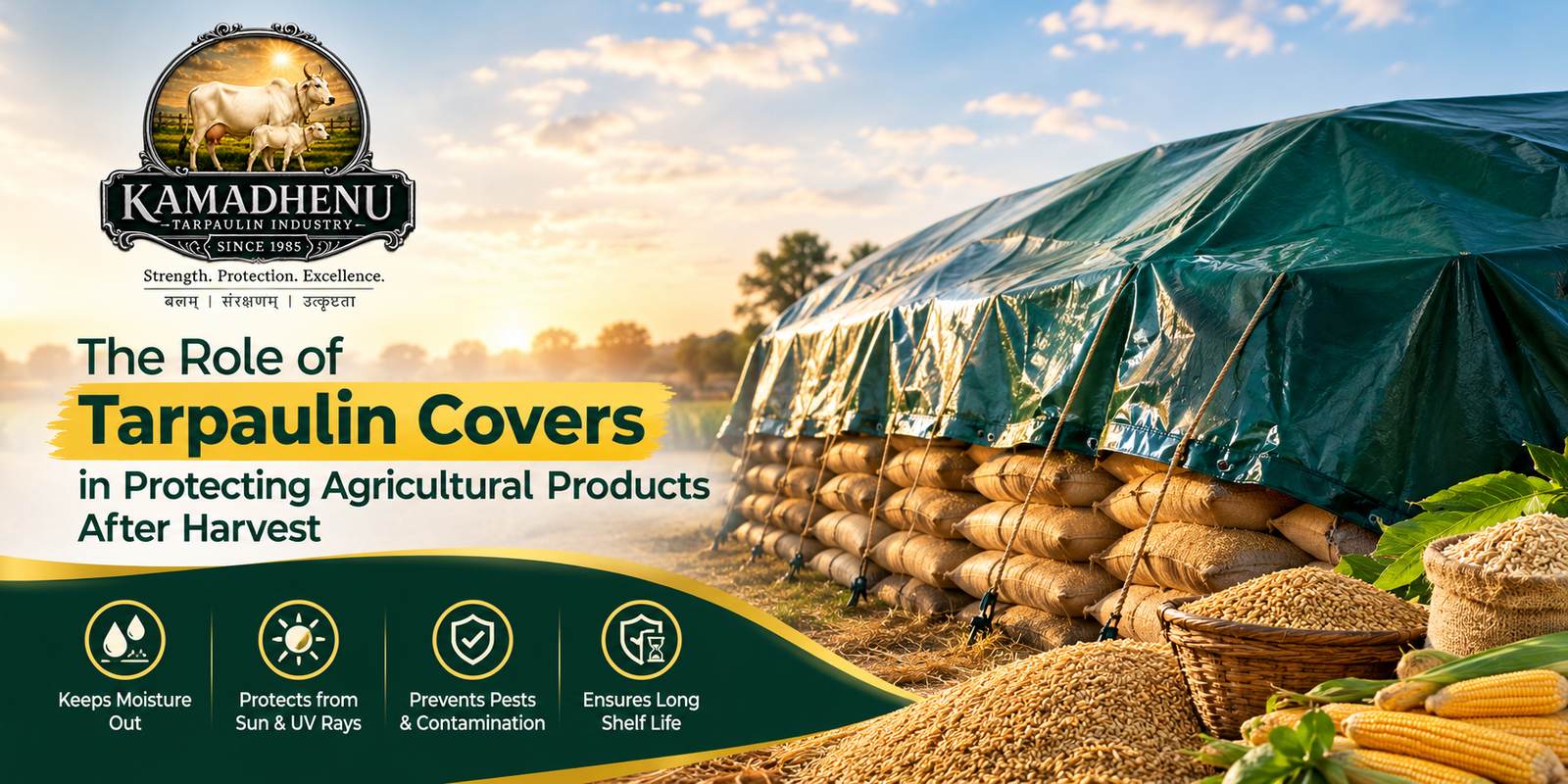
sites, where materials sit outdoors for weeks - Agricultural
produce, protecting grain and crops from rain and sun - Trucks
and warehouses needing a durable, reusable cover - Temporary
shelters and machinery protection
Because HDPE sheets are woven and laminated, they resist
tearing even under constant wind and sun exposure — a big advantage in India's
mixed climate zones, from coastal humidity to peak summer heat.
Canvas Tarpaulin: Strength With Breathability
Canvas tarpaulins trade some waterproofing for breathability
and a heavier, more traditional feel. They're often preferred where:
- Moisture
needs to escape rather than get trapped (avoiding mildew on sensitive
goods) - A
heavier-duty, long-lasting fabric is worth the extra weight - The
covered material needs a bit more cushioning or a premium finish
Canvas remains a favorite in industries where durability
under repeated folding and handling matters more than ultra-lightweight
portability.
Beyond Tarpaulins: Think About the Whole Job
Many projects need more than just a cover. If you're setting
up a farm pond, you'll want a dedicated pond liner rather than a
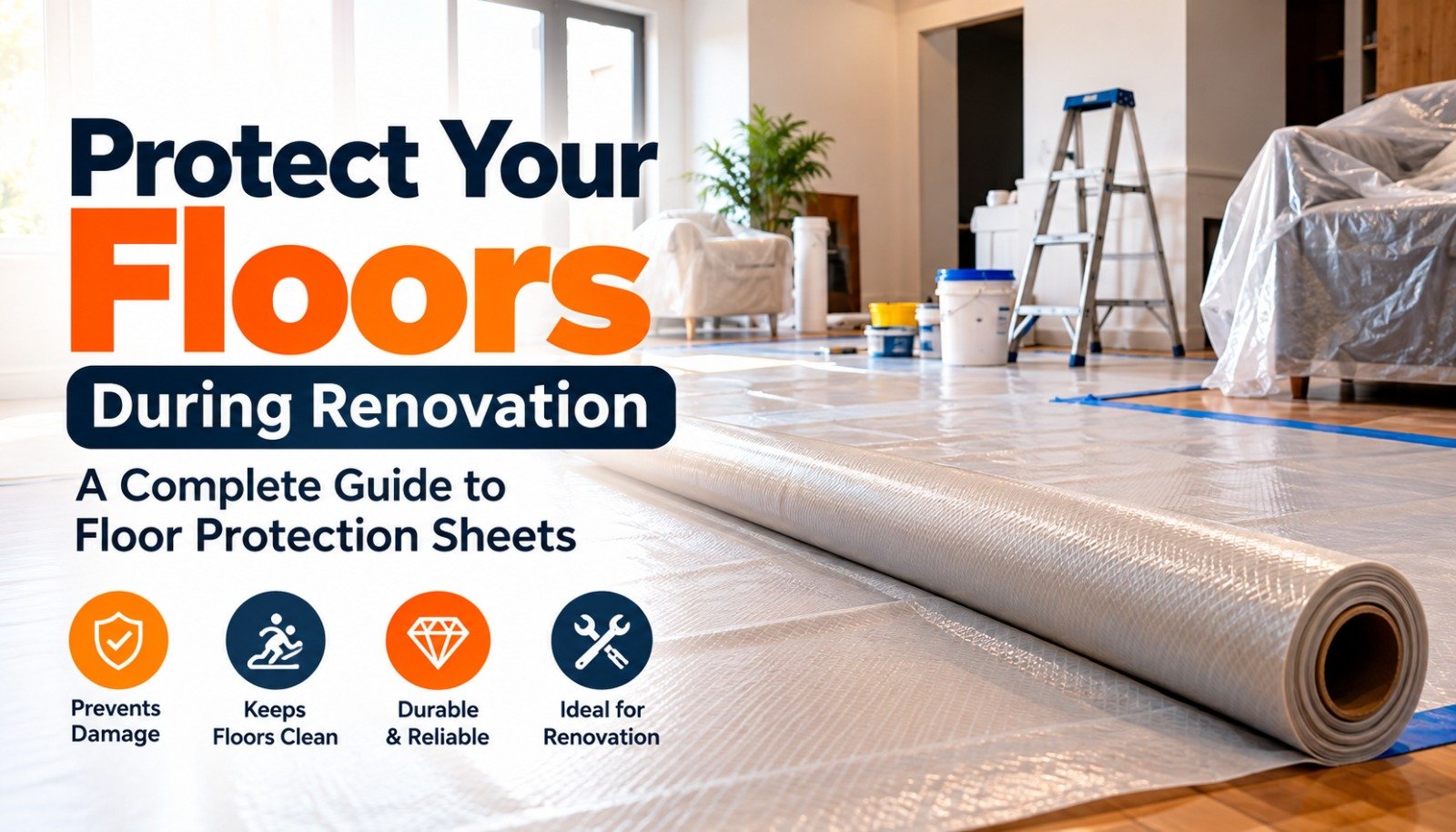
general-purpose tarpaulin. If you're protecting flooring during construction or
an event, floor protection sheets are built specifically for foot and equipment
traffic. And if your project involves securing loads, industrial nets and ropes
round out the setup.
This is really the philosophy behind our product range —
protection isn't one product, it's a system. What started in 1985 as a single
tarpaulin manufacturing unit has grown into flooring, agriculture products,
floor protection sheets, ropes, and safety nets precisely because customers
kept asking us to solve the next problem, not just the first one.
A Quick Decision Checklist
If you need... | Consider... |
Maximum waterproofing + UV resistance | HDPE Tarpaulin |
Breathable, heavy-duty covering | Canvas Tarpaulin |
Pond or water containment | Pond Liners |
Protecting floors during work | Floor Protection Sheets |
Securing loads or covers | Industrial Nets & Ropes |
The Kamadhenu Difference
Nearly four decades in, we still manufacture the core of our
range in-house — which means quality control from raw material to finished
sheet, not just a trading relationship. That's a big part of why we've become
one of South India's broadest suppliers of protection and flooring solutions.
If you're unsure which product fits your specific use case,
reach out to us directly — we're happy to recommend the right material,
thickness, and size for your exact conditions rather than sell you a
one-size-fits-all sheet.